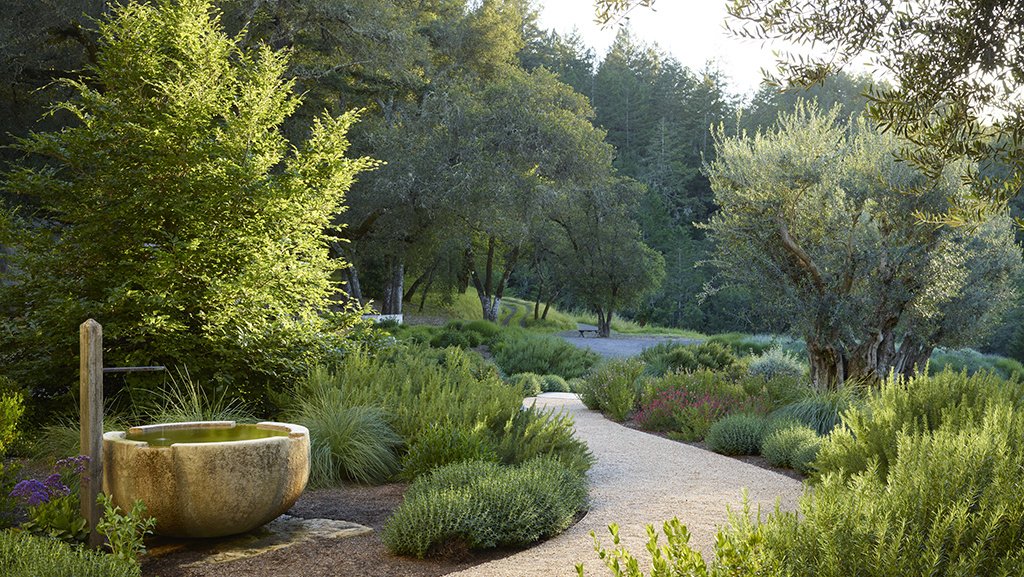
“There is a particular kind of buyer who will never appear in a CRM from a portal lead. They do not browse listings. They hear your name from someone who already trusts you — in a conversation that happened somewhere quiet.”
This article is for that buyer. And the subject — the Catalan masia — is their property.
Carved from limestone and oak, south-facing by design, bound to land that in some cases has been cultivated across forty generations — the masia is not a trend. It is a fact of this landscape. And yet something has shifted. What was once abandoned, overlooked, crumbling quietly beneath cork trees, has become the object of serious international desire.
Understanding why that is — and what it means for how extraordinary properties of this kind are found, restored, and transferred — is the subject of everything that follows.
What the Masia Is
A masia is a traditional Catalan farmhouse — in many cases hundreds of years old — built from stone, wooden beams, and clay tile, oriented south to harvest light and warmth, anchored to agricultural land that was inseparable from the life lived inside it. The word derives from mas, meaning isolated rural house: a dwelling that was always understood to exist in relation to the territory around it, not apart from it.
According to data held in municipal registries across Catalonia, there are nearly 23,000 identified masias in the region, with documented examples dating to the twelfth century. This means the typology was constructed continuously across more than seven centuries — each generation adding to, adapting, and repairing buildings whose structural logic remained essentially unchanged. The masia evolved, but it did not transform. That continuity is part of what makes it so rare.
The tragedy of the twentieth century is that most were abandoned. Rural migration toward Barcelona and other cities during the industrial decades left tens of thousands of masias emptied, their land untended, their stones slowly separating. By the late 1990s, many were considered ruins too costly and legally complex to restore. The regulations governing what could be altered, what must be preserved, and what materials could be used were strict — and strictly enforced.
That strictness, in retrospect, was a gift. It meant that the surviving masias — those now reaching the market in states ranging from structural ruins to magnificent full restorations — carry their identity intact. The limestone walls were not replaced with concrete. The original proportions were not subdivided. The south-facing logic was not overridden by a developer's floor plan. What remains is authentic in a way that is increasingly difficult to find anywhere in Europe.
continuous typology
in Catalonia
buyer share
Foreign buyers now account for the majority of masia acquisitions — primarily from the Netherlands, Belgium, the United Kingdom, Germany, and France. These are not holiday home purchases. Independent research and notarial transaction data consistently show that most international buyers intend primary or near-primary residence. They are making a life decision. They are choosing Catalonia.
The Market & Its Range
The masia market does not conform to standard property categories. It is not a segment with average prices and predictable supply. It is, instead, a series of entirely individual circumstances — each property representing its own combination of location, condition, scale, land, legal status, and restoration potential.
What the market offers, broadly, is a range that begins at entry and has no credible ceiling. A masia requiring complete structural intervention can be acquired from as little as €150,000 — the purchase price reflects the condition, but the project that follows will determine everything. At the other end, landmark masias that have been restored to exceptional standards, in prime locations within the Empordà, the Baix Camp, the Pla de l'Estany, or other prestige rural areas, have transacted well above €10,000,000. Between those poles, the market is dense, varied, and often opaque — which is precisely why the quality of advisory matters so much.
| Profile | Condition | Price Range |
|---|---|---|
| Ruin with land | Structural intervention required | From €150,000 |
| Partially restored | Habitable, cosmetic work outstanding | €400k – €1.2M |
| Fully restored, mid-scale | Turn-key, quality materials | €1.2M – €3.5M |
| Exceptional estate | Landmark restoration, significant land | €3.5M – €10M+ |
These are orientations, not brackets. Every masia transaction is, in a meaningful sense, bespoke. The variables that determine value in this market — views, water rights, soil classification, proximity to infrastructure, the coherence of the restoration, the quality of materials specified, the architectural pedigree of the intervention — cannot be reduced to price-per-square-metre logic. They require judgement. They require experience with the specific territory. And they require relationships that go well beyond what any public listing can offer.
- —Location within Catalonia’s most historically resonant landscapes — Empordà, Guilleries, Penedès, Priorat, Baix Camp
- —Land quality, extent, and classification — agricultural, forestry, protected natural zones
- —Water access — springs, cisterns, irrigation rights associated with the mas
- —Structural integrity and the authenticity of existing stone, beam, and vault
- —Quality and coherence of any restoration already undertaken
- —Materials specification — local limestone, Catalan terracotta, traditional lime plaster, oak from nearby forests
- —Legal status and catalogue listing, which determines what can be done and how
- —Off-grid capacity — solar, cistern, self-sufficiency potential increasingly sought
- —Relationship to landscape: views, orientation, garden, relationship between interior and exterior
Architecture as Responsibility
The restoration of a masia is not a renovation project in the conventional sense. It is, at its best, an act of cultural stewardship — undertaken by people who understand what they are touching and feel the weight of that understanding.
The regulations that govern masia restoration in Catalonia are deliberately restrictive. Each municipality maintains a catalogue of protected rural buildings, and restoration is only permitted — in most cases — for catalogued properties. The materials specified must belong to the vernacular tradition of the region: irregular limestone masonry, natural lime mortar, wooden beams sourced locally, ceramic tile and terracotta following established proportions. Extensions, where permitted at all, are generally limited to ten to twenty percent of the existing footprint. The building's logic — its orientation, its massing, its relationship to the land — cannot be overturned.
The question that must precede every intervention is not what we wish to add — it is what we are obligated to preserve. The masia's identity is not a starting point for design. It is the design.
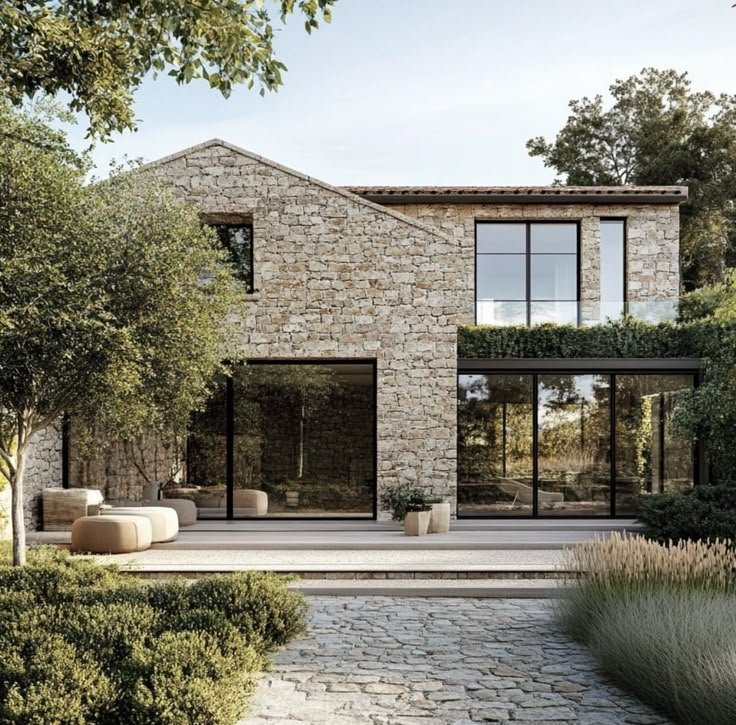
This framework produces an extraordinary discipline. Architects who work with masias habitually — who know the registries, know the local inspectors, know the approved material suppliers, and know which interventions will be read as respectful and which will create years of obstruction — bring something that cannot be replicated by importing talent from elsewhere. The masia demands local knowledge, not just design skill.
The best restorations currently visible in the Catalan landscape share certain qualities: they are quiet in their modernity; they do not announce themselves. A new courtyard has been opened not because the architect wanted to make a statement but because the original interior was dark and deserved light. A stone has been set back rather than reset because its imperfection told something true about the wall's age. A pool, where present, relates to the geometry of the land rather than imposing itself upon it.
VERV ONE has overseen several confidential restoration projects of this character — each one different, each one defined by the particular qualities of its site and the specific vision of its owner. In each case, the process has involved months of preliminary work: reviewing cadastral records, commissioning structural and conservation assessments, identifying suppliers whose materials are genuinely local and genuinely appropriate, and building the relationships — with architects, with contractors, with the municipal administration — that determine whether a project of this sensitivity can be realised well or merely realised.
The clients who undertake these projects are not seeking recognition. They are seeking rightness. They want to know that what they have built will be there in another four centuries, carrying the same quality of presence as the stones that were already there. That is the ambition VERV ONE works to honour.
Why 2026 & What Comes Next
The macroeconomic context of 2026 has accelerated a shift that was already underway. Independent analysis published in the European luxury residential market press — including assessments by international property analysts and the financial press — consistently identifies the same pattern: high-net-worth buyers are moving away from prestige defined by address and toward prestige defined by authenticity, irreplaceability, and the quality of daily experience.
The masia answers this precisely. It cannot be built again. It cannot be replicated elsewhere. Its qualities — the weight of its walls, the scale of its interiors, the relationship between the house and its surrounding land — emerge from conditions that no longer exist and cannot be recreated. This is rarity in the truest sense: not artificial scarcity produced by a developer, but the genuine scarcity of time.
European financial publications have noted the growing alignment between wellness architecture and heritage acquisition — the recognition that proximity to landscape, silence, and physical materiality has measurable effects on wellbeing. The masia sits at exactly this intersection. It is not a wellness property in the commercial sense. It is a building whose entire construction logic was premised on attunement to its environment. The south orientation maximised light and warmth. The thick walls regulated temperature without mechanical assistance. The courtyard or covered gallery mediated between inside and outside. These are not design features. They are the result of seven centuries of refinement.
The regulatory environment, meanwhile, has become more supportive of restoration — particularly in the context of energy transition. European Union funding frameworks currently active in Spain offer meaningful grants for the energy efficiency components of heritage renovation: solar photovoltaic installations, aerothermal systems, thermal insulation. These instruments can cover a significant proportion of the technical infrastructure costs, making the financial case for restoration stronger than it has been at any point in recent decades.
What this creates — for the buyer who is ready, the advisor who is experienced, and the network that can identify the right property before it reaches public circulation — is a moment of genuine opportunity. The best masias, in the best locations, with the most compelling combination of qualities, will not remain available. They will be absorbed into private hands quietly, without announcement, without ceremony. They will disappear from the possible into the accomplished.
That is how it has always worked, in this market. That is how it will continue to work. And VERV ONE's role, as it has always been, is to be present at precisely that moment — with the knowledge, the relationships, and the discretion to make it happen well.
The best properties of this kind do not appear on portals. They do not wait. They are transferred between people who are already, in some meaningful sense, known to each other.
The masia is not simply a building to be acquired. It is a relationship to be entered into — with the land, with the material, with the history that is already present in the walls. VERV ONE exists to introduce the right people to the right place, and to guide what happens between that introduction and the moment the door is finally closed, from the inside, for the first time.
Sitges · Barcelona · Girona · Costa Brava · The Cotswolds
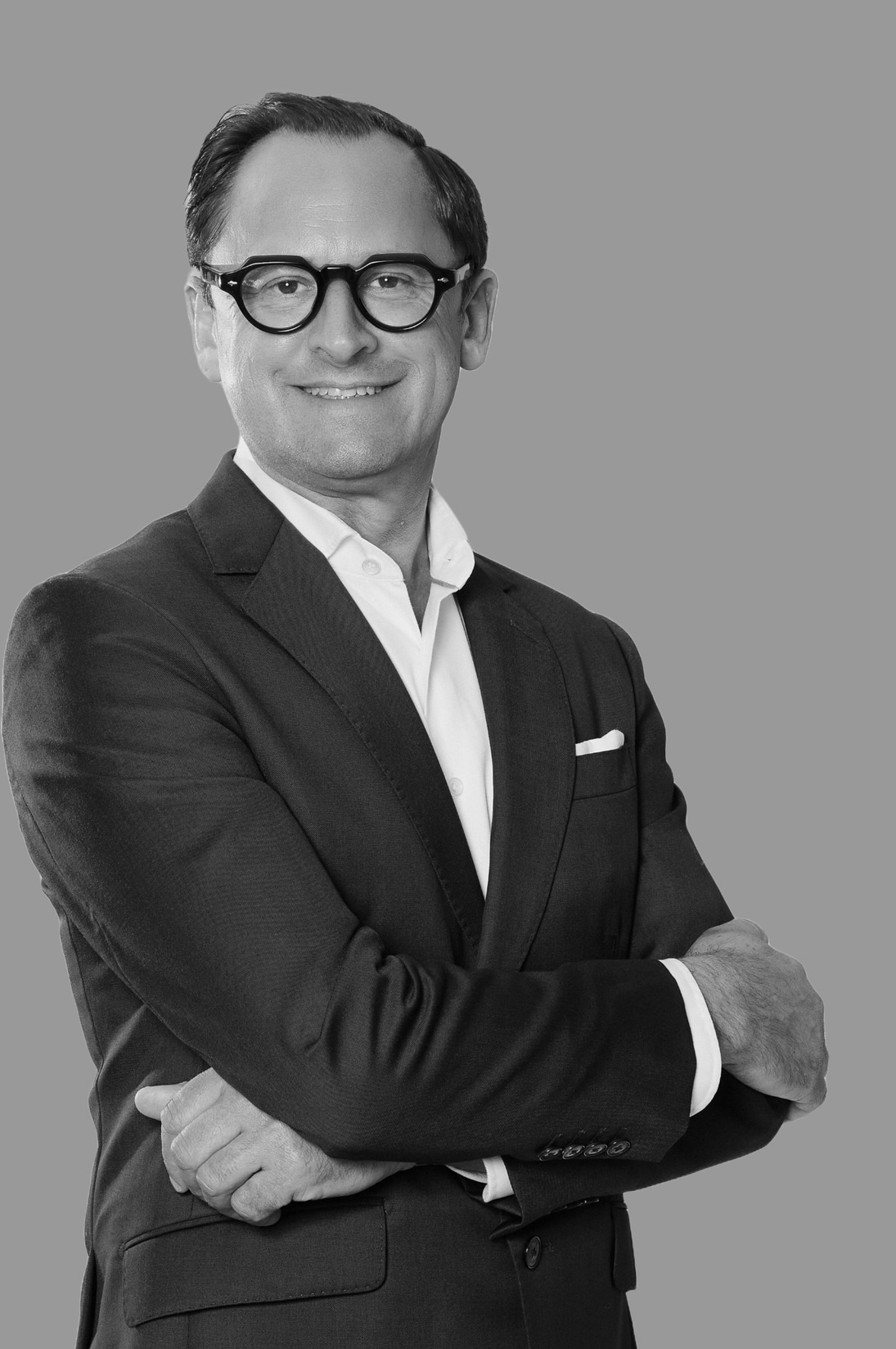
With over two decades of experience in luxury real estate and construction project management across Catalonia, Ronei founded VERV ONE as a boutique advisory practice where discretion, craft, and long-term client relationships take precedence over volume. He divides his time between Sitges, the Costa Brava, and The Cotswolds.