
VERV Research · 15 March 2026 · 12 min read
Barcelona's property market enters 2026 with strong fundamentals and a maturing international profile. After a year of record-breaking price appreciation across prime neighbourhoods, the market is settling into a more measured pace of growth — a positive indicator for both buyers and sellers seeking long-term value rather than speculative gains.
This report draws on verified data from the Colegio de Registradores (Spanish Land Registry), INE (National Statistics Institute), Idealista, and analysis from BBVA, CaixaBank, and Singular Bank research divisions.
Record Prices, Moderating Growth
The headline figures from 2025 are striking. The average price of residential property in Barcelona reached €4,989 per square metre by the end of Q3 2025, marking a 9.4 per cent year-on-year increase according to Land Registry data. By October 2025, Idealista recorded citywide asking prices at €4,991/m² — an all-time high.
Transaction volumes tell an equally robust story. In the first nine months of 2025, a total of 55,465 properties changed hands in Barcelona Province — a 19 per cent increase on the same period of 2024. New-build sales surged by 28.7 per cent, though they represent only around 5 per cent of total residential listings, underscoring the acute scarcity of new supply.
For 2026, consensus among Spain's major banks points to a moderation. BBVA and Santander project citywide price growth of 2 to 5 per cent, while Singular Bank forecasts a cumulative 9 per cent national increase by end of 2026. Market analysts anticipate 2.5 to 4 per cent growth in Barcelona specifically, with core areas such as Eixample and Sarrià-Sant Gervasi expected to outperform.
“The market is stabilising rather than accelerating — a healthier dynamic for long-term investment.
Neighbourhood by Neighbourhood
Barcelona's property market is not monolithic. Prices and dynamics vary significantly by district, and understanding these differences is essential for any serious buyer or investor.
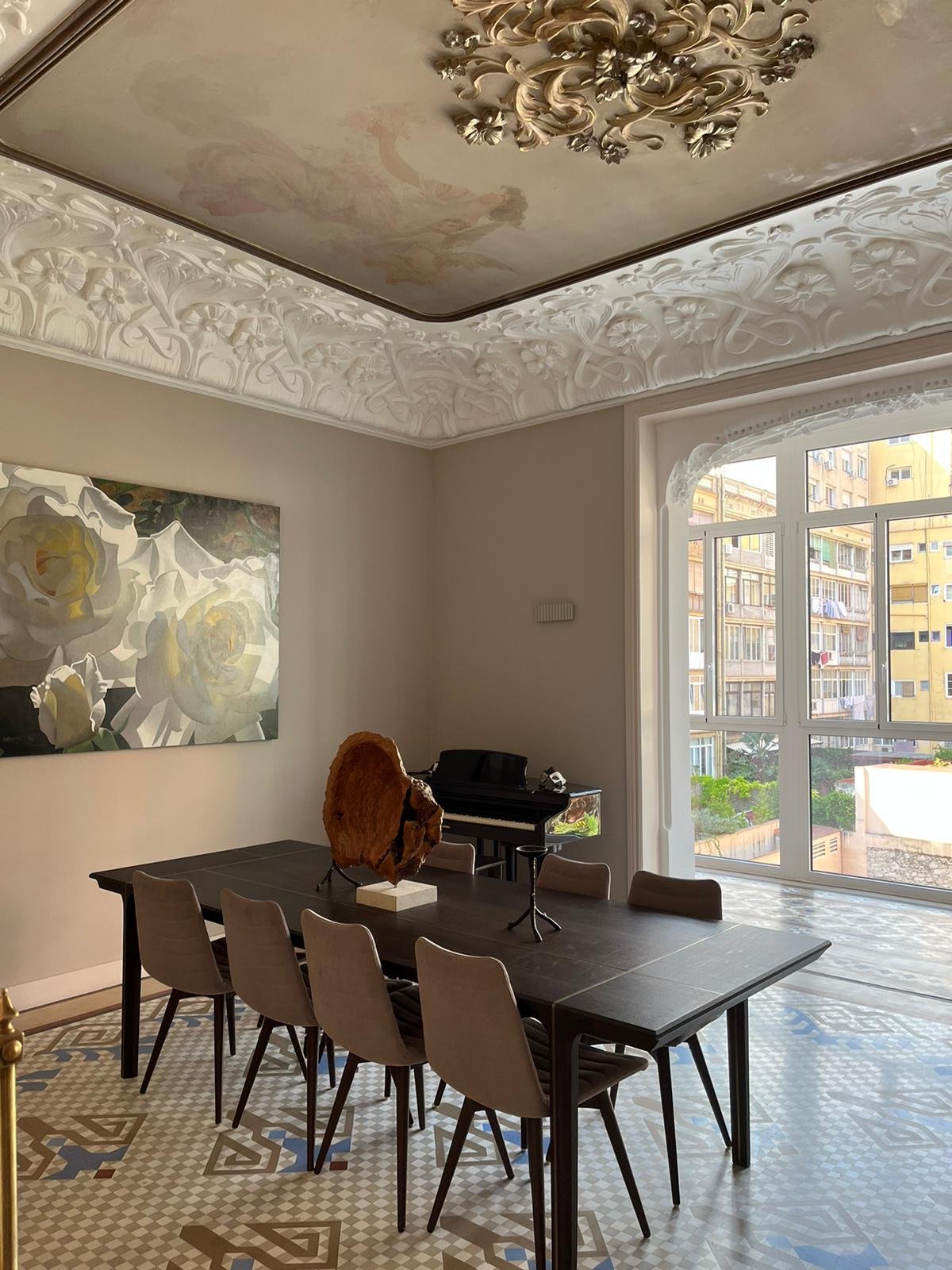
Sarrià-Sant Gervasi leads the city at €6,661/m², with a remarkable 14.6 per cent annual increase. Traditionally favoured by families for its proximity to international schools and green spaces, the district has seen surging demand from northern European buyers. Renovated apartments in Tres Torres and Pedralbes regularly exceed €9,000/m², while detached villas with gardens command €3 million to €8 million.
The Eixample remains the most liquid luxury market, with restored modernist properties along Passeig de Gràcia commanding €6,000 to €8,500/m². Prime areas in Barcelona reached average asking prices of €7,200/m² according to Idealista data from early 2025. The district recorded a 9.8 per cent price rise in Q3 2025.
Ciutat Vella (the Old Town, including the Gothic Quarter and El Born) remains tightly supply-constrained. Foreign buyers accounted for an extraordinary concentration of activity here, drawn by character properties with historical significance. Prices reached €4,826/m² in Q3 2025.
Sant Martí, encompassing the Diagonal Mar and Poblenou areas, represents an emerging luxury segment. New-build developments targeting international buyers offer larger floor plans and sea views at a relative discount to prime central locations. The broader district saw strong foreign buyer activity in 2025.
The Golden Visa: End of an Era
Perhaps the most significant regulatory development of 2025 was the abolition of Spain's Golden Visa programme. On 3 April 2025, under Organic Law 1/2025 published in the BOE on 3 January 2025, the Spanish government ended the granting of residence permits to non-EU nationals investing €500,000 or more in real estate. The programme, introduced in 2013, had attracted thousands of investors during its twelve-year run, with 94 per cent of Golden Visas granted through property purchases.
What Changed — and What Didn't
No Longer Available
Automatic residency through property investment of €500,000+. Prime Minister Sánchez framed the abolition as treating housing “as a right instead of a speculative business.”
Still Fully Legal
Non-residents purchasing property in Spain. Foreign nationals retain the same property rights as Spanish citizens — no limits on purchase amount, location, or number of properties. Existing Golden Visa holders may renew provided original conditions are met.
Alternative Residency Pathways
Non-lucrative visa (for those with sufficient means), entrepreneur visa, digital nomad visa, and family reunification remain available routes to Spanish residency for non-EU buyers.
The impact on Barcelona's market has been more nuanced than many predicted. The majority of international purchasers were already EU nationals or individuals buying for lifestyle reasons rather than residency. The data confirms that foreign demand has not contracted — if anything, it has continued to grow.
International Demand: Stronger Than Ever

Foreign buyers accounted for approximately 30 per cent of all property purchases in Barcelona city as of September 2025, according to Land Registry data — a significant increase from 19 to 23 per cent in 2019–2020. In the first nine months of 2025, some 3,002 foreign buyers completed transactions in the city.
At the national level, full-year 2025 statistics showed a record 145,370 overseas buyers in Spain — a 4.2 per cent increase on 2024 — with foreign market share steady at 19.8 per cent nationally. Barcelona Province attracted 14.18 per cent foreign buyer share, nearly double the proportion seen in Madrid (7.11 per cent).
“Barcelona's appeal extends well beyond visa incentives. The city's lifestyle, connectivity, and cultural richness sustain demand regardless of regulatory changes.
Supply Crisis & the Rental Squeeze
The supply side of Barcelona's housing equation remains deeply constrained. Just 1,195 new homes were approved in Barcelona in 2025 — a 39 per cent year-on-year collapse and the lowest figure in a decade, even lower than the pandemic year of 2020. New-build properties represent only around 5 per cent of all residential listings.
Barcelona's development pipeline is squeezed by zoning restrictions, environmental regulations, and an increasingly complex permitting process. Most additions to the market will come from renovation and retrofitting rather than new construction. The European Investment Bank has committed €113 million to Barcelona City Council for 640 social housing units, but these are scheduled for completion between 2026 and 2030 — a modest contribution given the scale of demand.
The rental market reflects this scarcity. Average rents in Barcelona reached approximately €23.50 per square metre per month in early 2026, with premium districts such as Eixample (€26.50/m²) and Ciutat Vella (€26.30/m²) commanding even higher rates. Rents in the city have risen by 68 per cent over the past decade.
Two landmark regulatory changes are reshaping the rental landscape. First, Catalonia's new rental price caps in ‘tensioned’ housing zones — covering most of Barcelona — tie new leases for existing properties to a government reference index. Second, Barcelona will phase out all 10,101 licensed short-term rentals by November 2028, following a Constitutional Court ruling in March 2025 that upheld the city's authority to eliminate tourist apartment licences. The objective is to return these properties to long-term residential use.
“The structural supply-demand imbalance remains firmly in place. Demand for well-located, energy-efficient homes continues to outstrip available stock.
Mortgage Conditions & the Euribor
Financing conditions are a key factor for buyers in 2026. The 12-month Euribor — the benchmark for variable-rate mortgages in Spain — stood at approximately 2.15 to 2.30 per cent in March 2026, having closed December 2025 at 2.267 per cent after five consecutive monthly increases. The Funcas economic panel expects the indicator to stabilise and ease slightly through 2026.
Spanish banks currently offer fixed-rate mortgages at approximately 3.0 to 3.5 per cent for residents, with non-resident buyers typically securing rates of 3.5 to 4.5 per cent with a loan-to-value ratio of 60 to 70 per cent. The European Central Bank is not expected to make significant changes to official interest rates during 2026, with the central scenario being one of monetary stability.
CaixaBank has cautioned that potential price corrections of 5 to 10 per cent remain possible in overheated districts such as parts of the Eixample if mortgage rates stay elevated and regulatory restrictions proceed. However, most analysts agree that structural supply shortages should prevent any significant market-wide decline.
Our Outlook for 2026
Barcelona's appeal as a place to live and invest remains compelling. The combination of world-class architecture, a Mediterranean climate, excellent international connectivity, and a relatively favourable cost of living compared to London, Paris, or Zurich ensures sustained demand for premium property. Several themes will define the year ahead:
Price Growth Moderates
Expect 2.5 to 5 per cent growth citywide, with prime districts outperforming. A healthy correction from the 9 to 17 per cent gains of 2024–2025.
Supply Remains Scarce
With building permits at decade lows and the short-term rental phase-out adding only modest supply, competition for quality stock will persist.
International Buyers Evolve
The post-Golden Visa buyer profile skews toward lifestyle purchasers — EU nationals and global citizens who value Barcelona for what it is, not for a visa.
Renovation Opportunities
With limited new build, sensitively renovated properties in emerging areas like Poblenou and Sant Antoni offer the strongest value proposition.
Regulatory Awareness
Buyers must navigate rental price caps, the tourist apartment phase-out, and energy efficiency requirements. Professional guidance is essential.
Financing Window
Stable Euribor rates and competitive bank offerings create a reasonable window for leveraged purchases — but non-resident terms require specialist advice.
The principal risks include further regulatory changes, broader macroeconomic uncertainty, and potential corrections in the most overheated micro-markets. However, the fundamental equation — strong demand, limited supply, enduring appeal — supports continued measured growth in Barcelona's most desirable locations.
For buyers considering a purchase in 2026, the market offers genuine opportunities — particularly in up-and-coming areas and in properties that require sensitive renovation. The end of the Golden Visa, far from diminishing interest, has simply shifted the buyer profile toward those purchasing for the right reasons: a genuine desire to own a piece of one of Europe's most extraordinary cities.
Sources & References
- Colegio de Registradores de la Propiedad — Estadística Registral Inmobiliaria 2025
- INE (Instituto Nacional de Estadística) — Housing Price Index 2025
- Idealista — Barcelona Property Prices & Foreign Buyer Data (2025–2026)
- Spanish Property Insight — Barcelona House Price Data & Market Reports
- BBVA Research & Santander Research — Spain Property Price Forecasts 2026–2027
- CaixaBank Research — Housing Market Analysis 2025
- Singular Bank — Housing Price Forecast (9% cumulative by 2026)
- Organic Law 1/2025 — BOE, 3 January 2025 (Golden Visa abolition)
- KPMG — Spain Golden Visa Cancelled (Flash Alert 2025-008)
- European Investment Bank — €113m Barcelona Social Housing Facility
- Funcas Panel — Euribor Forecast 2026
- Banco de España — Mortgage Market Statistics 2025–2026

Ronei Kolesny-Clegg
Licensed REALTOR (No. 061327620) · API Member (No. 1690) · AICAT Member (No. 12717)
Founder of VERV ONE, specialising in luxury real estate across Sitges, Barcelona, Girona, Costa Brava, and The Cotswolds.
Considering Barcelona?
Our team provides confidential, data-driven guidance for international buyers navigating the Barcelona property market.
Arrange a Consultation